
Lighting scenes for how you live
A showroom lighting demo is theatre: bright, dramatic, cinematic. It sells the system. It is also nothing like how anyone lives in a house.
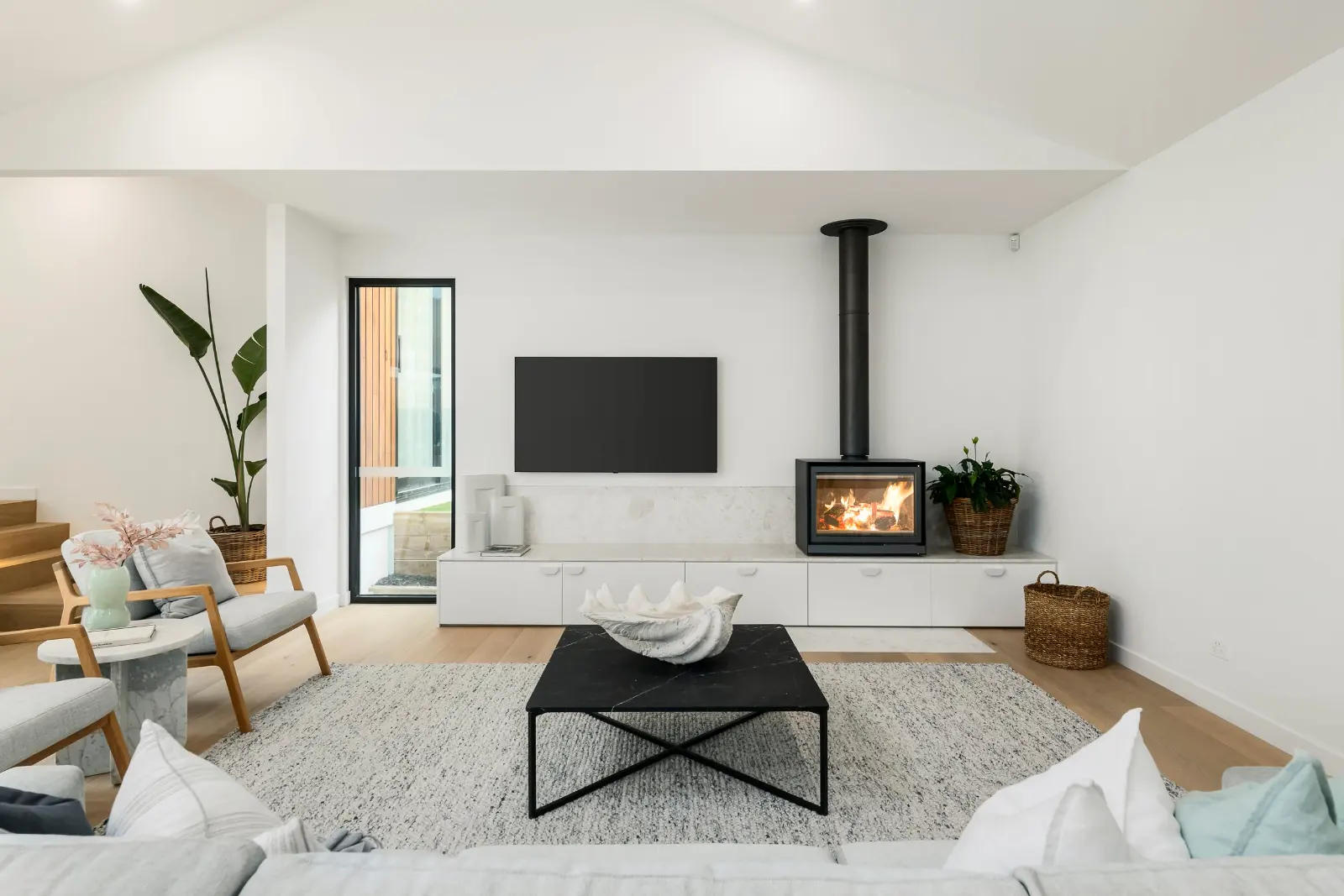
The demonstration version of intelligent lighting is always the same. Everything comes up at once, colour shifts across a wall, a film plays, the blinds close on cue. It is impressive for ninety seconds and it tells you almost nothing about living with the system.
The useful question is a smaller one. What should this room do at seven in the morning, at four in the afternoon with wet school bags in the hallway, and at ten at night when one person is still reading?
A day has about six moments in it
Most homes need fewer scenes than people expect, and the ones they need follow the day rather than the rooms.
Morning is about getting out of the house. Cooler light where people are waking up properly — the bathroom, the kitchen — and warmer, lower light where they are not. Bedroom lighting that comes up slowly rather than all at once. In a house with motorised blinds, the blinds are part of this scene, because the real light source at seven in the morning is the window.
Day is largely the absence of a scene. Good daylight design does most of the work, and the system's job is to stay out of the way, lifting the back of a deep room where the glazing cannot reach.
After school is the one people forget to ask for and use constantly. Children's rooms and the kitchen at a level you can read and cook under, the formal rooms left alone.
Dinner is where the house changes character. The table drops to a low, warm light. The kitchen holds enough to finish cooking under. The living room settles behind it. Done properly the room feels larger and quieter, and nobody can say exactly why.
Evening is the long one — reading, television, the kitchen at half.
Night is a single button by the bed that takes the house down and leaves a safe path to the bathroom and the stairs.
Six scenes, each of which runs lighting, and often shading and climate, in one gesture.
Colour temperature is a design decision, not a default
Warmer light reads as calm and flatters finishes and skin. Cooler light reads as alert and renders detail. A home wants both, in the right rooms at the right hours.
In practice that means a bathroom and a study sitting cooler, bedrooms and dining sitting warmer, and a kitchen that moves — cooler while it is being worked in, warmer once people are sitting down. Where the fittings allow it, the temperature shifts through the day rather than holding one setting, so the house tracks the light outside instead of arguing with it.
The constraint worth knowing early: this is decided by the light fittings, which are the architect's and the interior designer's choice, and by the control system's ability to drive them smoothly. Both are settled at design and documentation, with the lighting designer, not discovered at commissioning.
The keypad is a finishes decision
A keypad is a small object on a wall in a room somebody has spent eighteen months getting right. It is chosen in the palette, set flush in the joinery or the plaster, and positioned where a hand naturally goes — at the threshold, at the top and bottom of the stairs, beside the bed.
It carries words rather than numbers. Not "Scene 1" and "Scene 2", but the names the household actually uses. Engraved, so they do not wear off, and agreed with the people who live there rather than chosen by the integrator.
And it carries as few of them as possible. Four or five buttons that are understood beats twelve that are not. The test is a guest: someone who has never been in the house should walk into a room and turn the light on without being told how.
That test is also why the app is not the answer on its own. The app is right for the house from a distance — leaving the lights on, arriving at a dark home, checking before bed from another state. In the room itself, a wall is faster than a phone, and it works for everyone, including the people who do not have the app.
Where it is actually set: the finished room
Levels are commissioned in the room, at the hour the scene is for, with the furniture in and the curtains hung. Not from a plan, and not in daylight at eleven in the morning.
Dinner is set at dinner time. Night is set at night. Blinds are balanced against the glazing that exists rather than the glazing that was drawn. A scene that looked right on a laptop will usually be a little too bright in the room, because a screen is a poor guide to a space with timber floors and sheers.
This is also where the fine work happens: dimming that goes to a true low without flicker or a visible step, the fade from one scene to the next slow enough not to be noticed, levels matched between fittings from different manufacturers so one downlight does not sit brighter than its neighbour.
The honest part
Intelligent lighting is the discipline where cutting cost shows up fastest and most visibly. Cheap dimming flickers at the bottom of its range. Mismatched drivers make a row of identical downlights read as three different lights. Neither can be programmed out afterwards, because neither is a programming problem.
There is a floor here, and it is a real one. Where a budget sits below it, a smaller system done properly in fewer rooms is a better house than a whole-home system done thinly. Baillie will say which, rather than build something that disappoints in the first week.
Each keypad engraved with names chosen by the household, not the integrator.
The point of all of it is that nobody thinks about the lighting. The house is simply at the right level when you walk into the room, and the system that did it stays out of the picture.